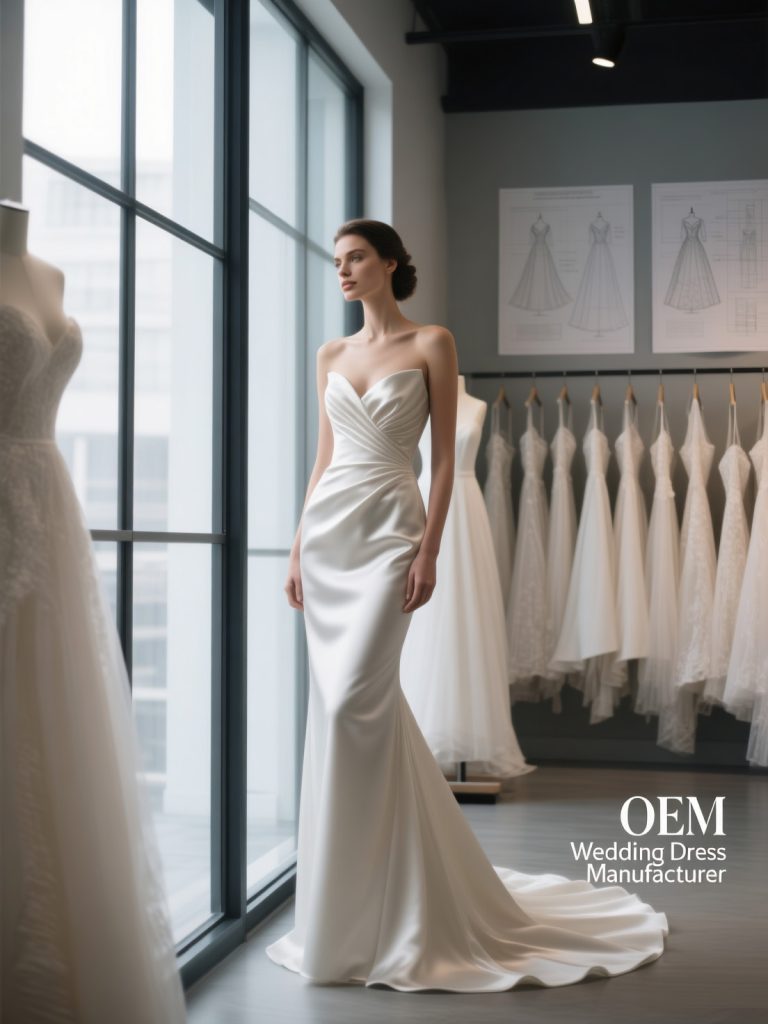
OEM Wedding Dress Manufacturer
For entrepreneurs, bridal boutique owners, and fashion designers looking to create their own wedding dress line, partnering with an OEM wedding dress manufacturer is often the most strategic decision. But what exactly does OEM mean, and how does it differ from other manufacturing models like ODM or private label? More importantly, how do you find the right OEM partner to bring your unique bridal visions to life? In this comprehensive guide, we will explain everything you need to know about OEM wedding dress manufacturing, including its benefits, the step‑by‑step process, potential challenges, and key factors to consider before signing a contract.
What Is an OEM Wedding Dress Manufacturer?
OEM stands for Original Equipment Manufacturer. In the wedding dress industry, an OEM manufacturer is a factory that produces gowns strictly according to your designs, specifications, and technical packages. Unlike an ODM (Original Design Manufacturer) that provides its own designs for you to choose from, an OEM manufacturer does not create designs for you. Instead, you provide complete documentation – detailed sketches, pattern specifications, fabric swatches, stitching instructions, trims, and measurements. The factory’s role is to execute your vision precisely, following your technical files to produce finished dresses that meet your quality standards.
In short, with an OEM wedding dress manufacturer, you own the design entirely. The factory is your production arm, not your design house. This model is ideal for brands that have in‑house design capabilities, unique intellectual property, or specific aesthetic requirements that cannot be found in ready‑made catalogs.
OEM vs. ODM vs. Private Label: Understanding the Differences
To appreciate the value of OEM, it helps to compare it with related models:
- OEM (Original Equipment Manufacturer): You design; the factory manufactures. You provide full technical packages. You own the design. Best for brands with unique, proprietary designs.
- ODM (Original Design Manufacturer): The factory designs and manufactures. You select from their existing designs or request minor modifications. The factory may own the base design. Best for brands without in‑house designers.
- Private Label: A broad term that includes both OEM and ODM. It simply means the final product is sold under your brand name, regardless of who designed it.
For bridal brands that have built a distinctive identity and want complete control over every curve, lace pattern, and seam, OEM is the preferred choice.
Why Choose an OEM Wedding Dress Manufacturer?
There are several compelling reasons why serious bridal brands turn to OEM manufacturing.
1. Complete Design Ownership
When you work with an OEM manufacturer, the dresses you create are yours – exclusively. No other brand can produce or sell your designs. This is crucial for building a unique brand identity and preventing copycats. You can trademark your designs and have legal recourse if they are stolen.
2. Total Creative Control
From the silhouette to the smallest bead, every decision is yours. You are not limited to a factory’s existing catalog. You can experiment with unconventional fabrics, custom color dyes, unique draping techniques, and specialized construction methods. Your brand’s signature elements become truly one‑of‑a‑kind.
3. Higher Perceived Value and Brand Equity
Brides are increasingly looking for original, non‑generic gowns. When you offer exclusive designs made specifically for your brand, you can command higher prices and build stronger customer loyalty. OEM allows you to position your brand as a designer label, not a reseller of mass‑produced dresses.
4. Scalability with Consistency
Once you have perfected your designs and technical packages, an OEM manufacturer can reproduce them consistently across large or small batches. You can start with a small pilot run of 10 dresses per style and scale up to hundreds as demand grows, all with the same quality standards.
5. Cost Efficiency at Volume
While the upfront development costs (pattern making, sampling, grading) are higher with OEM, the per‑unit production cost often becomes lower than ODM for larger quantities because you eliminate the factory’s design markup. For established brands producing hundreds of dresses per season, OEM is more economical.
The OEM Wedding Dress Manufacturing Process: Step by Step
Working with an OEM wedding dress manufacturer typically follows these stages:
Step 1: Design and Technical Package Creation
You create detailed design sketches, flat drawings, and a technical package (tech pack) that includes:
- Front, back, and side views with measurements
- Fabric specifications (type, weight, color, supplier)
- Lace and trim details
- Construction methods (seam types, boning placement, hem finishes)
- Size specifications (your custom size chart)
- Label and packaging requirements
Step 2: Pattern Making and Sampling
The OEM factory creates a first pattern based on your tech pack. They cut and sew a sample (often called a prototype or first sample). You review the sample for fit, construction, and accuracy. Revisions are made – sometimes through multiple sample rounds – until the sample is approved. This is the most critical phase.
Step 3: Grading and Marker Making
Once the sample is approved, the factory grades the pattern into all your required sizes (e.g., US 0–26). They create a marker (efficient layout of pattern pieces on fabric) to minimize waste.
Step 4: Fabric and Trim Sourcing
You either supply your own fabrics or have the factory source them according to your specifications. Many OEM manufacturers have established supply chains for Italian satin, French lace, soft tulle, etc. You approve all materials before cutting.
Step 5: Production
The factory cuts the fabric, sews the dresses, inserts boning, attaches lace appliqués, sews in your brand labels, and adds finishing touches. In‑line quality checks are performed at each stage.
Step 6: Final Quality Inspection
Before packing, each dress is inspected for stitching defects, loose threads, proper fit, and overall finish. You can request third‑party inspections or send your own QC team.
Step 7: Packing and Shipping
Dresses are carefully folded or hung, packed in garment bags or boxes, and shipped to your warehouse or store. Many OEM factories also offer custom packaging with your branding.
What to Look for in an OEM Wedding Dress Manufacturer
Choosing the right OEM partner is crucial because you are entrusting them with your designs and reputation. Here are key factors to evaluate:
- Experience with wedding dresses: Bridal gowns require specialized skills – corset boning, lace joining, train construction, heavy beadwork. Ensure the factory has a proven track record.
- Sample quality: Always order a sample before committing to bulk production. Examine stitching, lining, boning placement, and overall finish. A reputable manufacturer will be transparent about sample costs.
- Communication and responsiveness: OEM requires detailed back‑and‑forth. Choose a factory with fluent English communication (or your language) and quick response times. Time zone differences can be managed with clear protocols.
- Minimum order quantities (MOQs): Some OEM factories require high MOQs (50–100 pieces per style) which may not suit new brands. Look for manufacturers offering low MOQs (10–20 pieces) for pilot runs.
- Lead times: Typical OEM production takes 60–90 days from sample approval to shipment. Ask about rush options.
- Confidentiality and IP protection: Sign a non‑disclosure agreement (NDA) and a manufacturing agreement that clearly states you own the designs, patterns, and molds. Ensure the factory does not share or replicate your designs.
- Certifications and audits: ISO 9001 (quality management), BSCI (social compliance), or similar certifications indicate professionalism.
- References and reviews: Ask for contact information of past or current clients. Speak with other bridal brand owners about their experience.
Common Challenges and How to Overcome Them
OEM manufacturing is powerful but not without risks. Here are typical challenges and solutions:
Challenge: High upfront sample costs
Creating custom patterns and samples can cost $300–$800 per design. Solution: Budget for sample development as an investment. Some factories waive sample fees if you place a production order above a certain quantity.
Challenge: Miscommunication leading to production errors
Language or cultural gaps can result in wrong lace placement, incorrect measurements, or color mismatches. Solution: Use visual aids – redline photos, video calls, physical swatches. Create a detailed, illustrated tech pack. Approve a “production standard” sample before full run.
Challenge: Quality inconsistency between batches
The first batch may be perfect, but subsequent batches have issues. Solution: Require a “golden sample” for each new production run. Conduct random inspections. Build quality penalties into your contract.
Challenge: Intellectual property theft
Some unethical factories may sell your designs to other buyers. Solution: Work only with factories that have strong IP protection records. Register your designs in your home country and the factory’s country if possible. Include non‑compete and non‑disclosure clauses.
Is OEM Right for Your Brand?
OEM wedding dress manufacturing is ideal if:
- You have original designs that set you apart.
- You have the budget for sample development (typically $3,000–$10,000 for a small collection).
- You plan to produce at least 50–100 dresses per style over time.
- You want to build a distinctive, high‑end brand.
- You are willing to invest time in detailed tech packs and quality control.
If you are just starting out with a limited budget and no design experience, ODM or private label with ready‑made designs may be a better first step. Many successful brands begin with ODM and transition to OEM as they grow.
Why AmoreCouture Is Your Trusted OEM Wedding Dress Manufacturer
At AmoreCouture, we specialize in OEM wedding dress manufacturing for brands around the world. With years of hands‑on experience in creating custom bridal gowns, we understand that your designs are your intellectual property and your passion. Our OEM services include:
- Full technical support: We help you turn rough sketches into production‑ready tech packs.
- In‑house pattern making and sampling: Fast, accurate sample development with unlimited revisions until you are satisfied.
- Premium material sourcing: French lace, Italian satin, soft tulle, crepe, chiffon, and more.
- Low MOQs: Start with as few as 10 pieces per design.
- Strict confidentiality: We sign NDAs and never share or reproduce your designs.
- Multi‑point quality control: Every dress is inspected before packing.
- Your branding: We sew your custom labels, attach hang tags, and use your packaging.
- Global shipping: Reliable logistics to any destination.
Whether you are launching a debut bridal collection or expanding an established line, AmoreCouture provides the craftsmanship, reliability, and respect for your creative vision that OEM demands. Our English‑speaking team guides you through every step – from pattern approval to final delivery.
Ready to bring your unique wedding dress designs to life? Contact us today:
- Email: sales@amorecouture.net
- WhatsApp/WeChat: +86 133 7765 7476
- Website: www.amorecouture.net
Let AmoreCouture be the OEM wedding dress manufacturer that turns your sketches into heirlooms.
Final Thoughts
Choosing an OEM wedding dress manufacturer is a significant decision that can define your brand’s future. It offers unparalleled creative control, design ownership, and the ability to build a truly distinctive bridal line. However, success depends on finding a factory with the right expertise, communication skills, and ethical standards. By doing thorough research, investing in sample development, and protecting your intellectual property, you can create wedding dresses that brides will cherish – all manufactured to your exact specifications. With AmoreCouture as your OEM partner, you gain a dedicated ally in the journey from concept to creation. Start your OEM journey today and watch your bridal brand flourish.