
Custom Crepe Wedding Dress
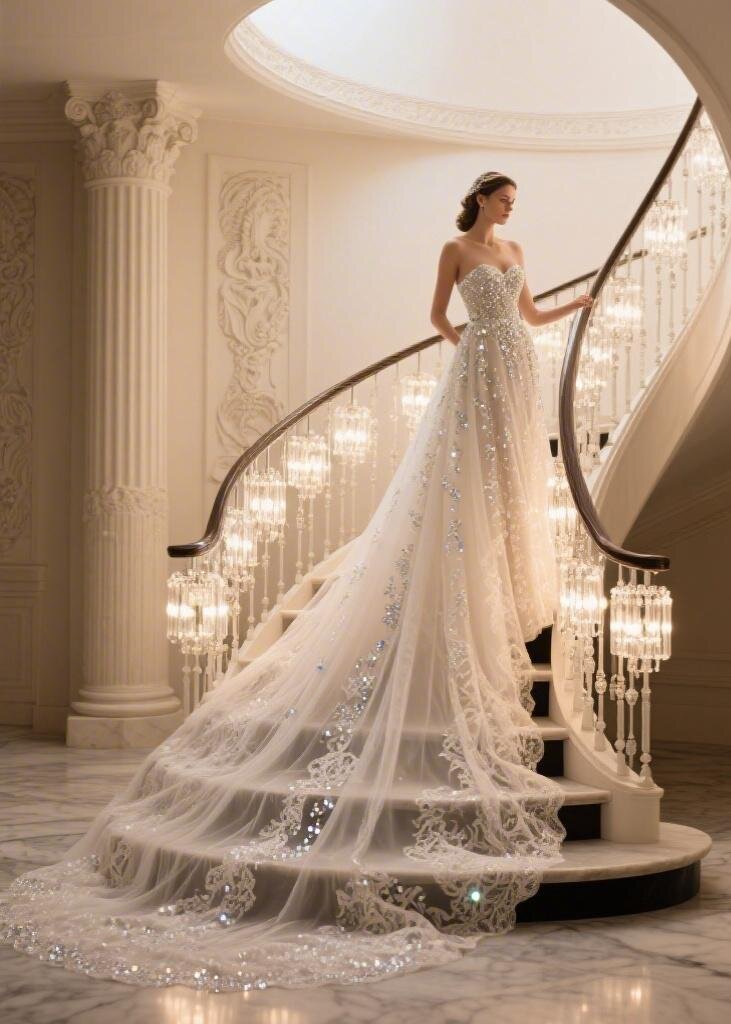
There is something undeniably modern about a bride who wears crepe. Unlike voluminous ball gowns or lace-covered A-lines, a custom crepe wedding dress speaks in whispers—but says everything. It hugs where you want, skims where you don’t, and moves like liquid confidence. For the bride who values clean lines, understated elegance, and a silhouette that follows her every curve, crepe is the fabric of choice.
But crepe is also unforgiving. That’s precisely why going custom isn’t a luxury—it’s a necessity. Let’s explore why a custom-made crepe wedding dress might be your perfect match, how to style it, and what makes this fabric so irresistible for modern brides.
What Is Crepe Fabric? (And Why It’s Not Just One Thing)
The term “crepe” refers to a weaving technique that creates a subtle, pebbled texture. Unlike shiny satin or stiff mikado, crepe has a matte finish and a beautiful drape. It can be made from silk, polyester, rayon, or blends. For wedding dresses, the most popular options are:
- Silk crepe: Lightweight, breathable, and impossibly soft. It has a natural luster that’s elegant without being shiny.
- Crepe back satin: Satin on one side, crepe on the other. You choose which side faces outward—versatile and forgiving.
- Polyester crepe: More affordable, wrinkle-resistant, and holds structure well. Ideal for destination weddings.
What all crepes share is a fluid, body-conscious drape. A custom crepe wedding dress follows your natural lines without adding bulk. It’s the fabric of minimalist icons—think Carolyn Bessette-Kennedy or Meghan Markle’s second reception dress.
Why Off-the-Rack Crepe Dresses Often Fail
Crepe is merciless to poor fit. Because it has no stretch (unless blended with spandex), it will gap, pull, or bag if the proportions aren’t exact. Off-the-rack crepe gowns are cut for a “sample size” body—usually a bridal 8 or 10. If you have a shorter torso, a longer rise, a fuller bust, or narrower hips, that dress will not look right.
Common issues with ready-made crepe wedding dresses include:
- Visible panty lines – Crepe shows everything. Even seamless underwear can create ridges if the dress isn’t lined perfectly.
- Pulling across the hips – If the hips are too tight, crepe creates horizontal wrinkles. Too loose, and it bags.
- Gaping at the back – Crepe has no forgiveness. A back that’s even 1cm too wide will sag unattractively.
- Twisting side seams – Mass-produced dresses often have misaligned seams that spiral around the body.
A custom crepe wedding dress eliminates all of these problems. Every dart, every seam, every inch of ease is calculated based on your unique measurements.
The Magic of Custom: Silhouettes That Shine in Crepe
Crepe is versatile, but it excels in specific silhouettes. When designing your custom dress, consider these options:
Slip Dress / Column – The ultimate minimalist look. A bias-cut crepe slip dress drapes like liquid metal. It’s perfect for courthouse weddings, elopements, or receptions. A custom version ensures the straps stay on your shoulders and the hem doesn’t drag.
Sheath – Slightly more fitted than a column, a sheath dress follows your body from bust to hem. Crepe’s weight keeps it from riding up. Add a low back or cowl neck for drama.
Mermaid / Fit-and-Flare – Crepe works beautifully for a fitted bodice and hips that flare at or below the knee. Because crepe isn’t stiff, the flare feels soft and organic—not like armor.
A-Line with Crepe Bodice – Some brides want a flowing skirt but love crepe’s matte finish on top. A custom dress can pair a crepe bodice with a tulle or organza skirt. This is a stunning compromise.
Two-Piece Sets – Crepe crop tops and high-waisted skirts are trending. Custom ensures the waistband hits exactly at your natural waist—no gaping or muffin-top effects.
How the Custom Crepe Dress Process Works (Step by Step)
Ordering a custom crepe wedding dress from a specialist like AmoreCouture is simpler than you think. Here’s what to expect:
Step 1: Share Your Vision – Send inspiration photos. Do you love the deep V of one dress, the back detail of another, the train length of a third? Your designer will help you combine elements that work in crepe.
Step 2: Precise Measurements – You’ll receive a measurement guide. Key numbers include: full bust, under-bust, waist (the smallest part), hips (widest part), shoulder width, armhole circumference, torso length (shoulder to waist), and hollow-to-hem (from collarbone to floor). For crepe, even quarter-inches matter.
Step 3: Fabric Selection – Choose your crepe type. Silk crepe for luxury and breathability. Crepe back satin for versatility (you can flip the hem to show the satin side). Matte polyester crepe for budget-friendly wrinkle resistance.
Step 4: Toile (Mock-up) Fitting – A test dress in cotton or inexpensive fabric is made and shipped to you. You try it on, take photos, and note any adjustments. This step is non-negotiable for crepe—it’s where the perfect fit is achieved.
Step 5: Final Dress Creation – After approval, your dress is cut from your chosen crepe. Seams are finished, hems are hand-stitched, and any lining (crepe is often lined with crepe or charmeuse for opacity) is installed.
Step 6: Final Quality Check – The dress is steamed, inspected, and carefully packed. Minor local alterations (like hemming for different shoes) are always possible.
Styling Your Custom Crepe Wedding Dress
Because crepe is so clean and modern, accessories should enhance—not compete with—the fabric.
- Veils: A simple raw-edge veil or a mantilla style. Avoid heavy beading that will snag crepe.
- Jewelry: Think single statement pieces. A pair of diamond (or moissanite) drops. A delicate back necklace if your dress has a low back.
- Underwear: Seamless, laser-cut, or adhesive styles. Many crepe dresses are lined, but it’s still wise to choose underwear without ridges. Some brides opt for stick-on cups and no panty lines at all.
- Shoes: Because hem length is custom, you can wear any heel height. Pointed toes and minimalist sandals work beautifully.
- Shapewear: If desired, choose a smooth, high-waisted short or slip. Avoid anything with boning or thick seams that will show through crepe.
Caring for Your Crepe Wedding Dress
Crepe is more forgiving than silk satin but less hardy than mikado. Follow these tips:
- Steam, never iron. Crepe crushes easily under a hot iron. Use a steamer on low, keeping the head at least 10cm from the fabric.
- Spot clean with care. For small marks, dab (don’t rub) with cold water and a drop of mild detergent. Test on an inside seam first.
- Store hanging or flat. Crepe can stretch over time if hung on a flimsy hanger. Use a padded hanger and a breathable garment bag. For long-term storage, fold flat along the waistline.
- After the wedding: Have the dress professionally cleaned and preserved. Crepe can yellow if stored improperly, so choose a preservation service that uses acid-free materials.
Is a Custom Crepe Wedding Dress Right for You?
Crepe is ideal for:
- Summer or destination weddings (lightweight and breathable, especially silk crepe)
- Indoor or evening ceremonies (the matte finish photographs beautifully under warm light)
- Brides who want to show their natural shape without heavy structure
- Second weddings or receptions where you want something chic and unfussy
Crepe may not be for you if:
- You want a huge ball gown (crepe lacks volume)
- You prefer heavy embellishment (beads and lace can weigh down crepe)
- Your wedding is outdoors in extreme heat (silk crepe is fine, but polyester crepe can feel sticky)
Real Bride Moments: Why Custom Crepe Wins
One AmoreCouture bride wore a custom crepe sheath dress with a cowl back for her rooftop wedding in New York City. “I tried on 20 crepe dresses in stores,” she said. “Every single one pulled across my hips or gaped at my back. My custom dress felt like it was painted on me—in the best way.”
Another bride combined a crepe bodice with a detachable tulle overskirt. “For the ceremony, I wanted drama. For the reception, I wanted to dance. My custom dress gave me both.”
Final Thoughts: Your Dress, Your Rules
A custom crepe wedding dress is not about being difficult or demanding. It’s about knowing that your wedding day deserves more than “good enough.” Crepe is a fabric that celebrates your body as it is—not as a sample size wishes it to be. When the fit is perfect, you stop thinking about your dress. You think about your vows, your partner, your dance floor.
At AmoreCouture, every custom crepe gown is made with the understanding that true elegance is personal. Whether you dream of a minimalist slip or a dramatic fit-and-flare, crepe will tell your story in clean, confident lines. Start designing yours today—because the best wedding dress is the one that fits only you.